

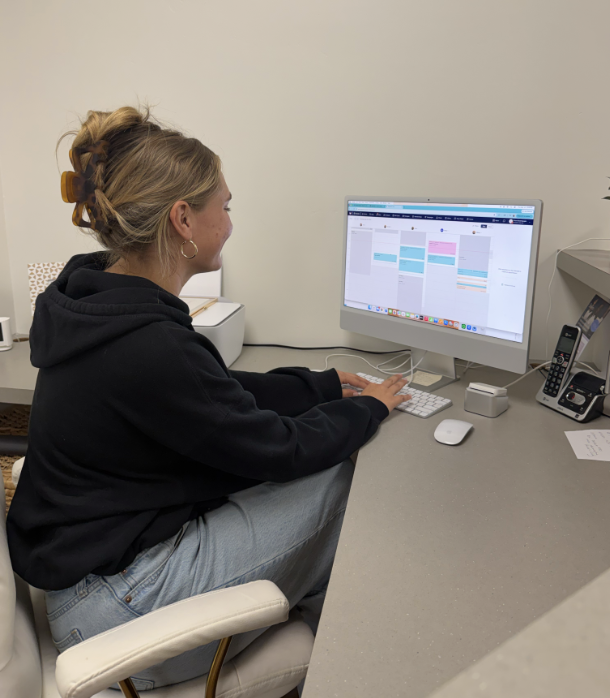
Kayla Cecena knew returning home to San Luis Obispo would mean more than just returning to school. It meant balancing college classes with work, finances and rising costs of living.
After attending Boise State University, Cecena decided to come back to the Central Coast and continue her education at Cuesta College. But staying in school meant finding a way to afford rent, daily expenses and future transfer plans. Now, she works four jobs while attending school part-time.
“I knew that I needed to save money in order to live in SLO and also go to school, so I have four jobs right now, so that kind of takes up a lot of my time, so that’s why I am a part-time student,” Cecena said.
For some students at Cuesta, the decision to attend part-time is not about taking an easier path. It is a financial strategy shaped by the rising cost of living, work demands and long-term educational goals.
Cecena said working four jobs allows her to support herself financially and prepare for the future, but the arrangement also comes with trade-offs. Her work schedule often leaves little time for homework and studying.
“Being a part-time student helps my financial aid because I am able to work more and save more money,” Cecena said.
Her experience reflects a growing challenge facing community college students: balancing the need to earn money now with the need to make steady progress toward a degree.
At Cuesta, students often must decide how many classes they can realistically handle while maintaining jobs, family responsibilities or both. For many, part-time enrollment can make college manageable in the short term, even if it may delay graduation.
Cecena said one of the hardest parts of her schedule is keeping up academically while managing multiple jobs. She said more flexible class options could help students in similar situations.
She would like to see more courses designed with working students in mind, especially classes with schedules that offer greater flexibility in completing assignments rather than following traditional weekly deadlines.
Lily Berry, a full-time Cuesta student, faces many of the same financial pressures but has made a different enrollment choice. Berry works while attending school full-time because she wants to save money before transferring to a four-year university and to avoid taking on large student loans as she tries to graduate on time.
“I am trying to save up so I can go to a four-year, so definitely like having a full-time job and being a full-time student,” Berry said. “It’s nice because I am able to make more money so I am not in so much debt.”
Berry said managing both work and school was difficult at first.
“In the beginning it was hard to keep up with all the work and school,” Berry said.
Over time, she developed a routine and stronger time-management skills, but she said balancing a full course load with employment still requires careful planning.
“I am making more money to have in the future by working a full-time job and I am getting more school done faster because I am taking more classes,” Berry said.
Berry said one of the biggest challenges is fitting coursework into a busy schedule. Like Cecena, she believes more flexible course scheduling could make college more manageable for working students.
While students experience these pressures personally, financial aid staff at Cuesta also see the bigger picture.
Sybil Smith, the Cuesta College Director of Financial Aid, said in an email from the Cuesta Marketing Department that the rising cost of living plays a major role in students’ enrollment decisions.
“Some are working more hours to support themselves, which limits the number of units they can take,” Smith said.
According to Smith, students who attend part-time may still qualify for financial aid, but they often receive less support.
“Students can still qualify for financial aid as part-time students, but the amount is usually reduced,” Smith said.
That can create difficult financial decisions for students. Students may pay less tuition upfront by taking fewer classes, but part-time enrollment can also slow academic progress. Smith said that taking longer to complete a degree can increase overall living costs, even if each semester feels more manageable.
She said students considering switching to part-time enrollment should weigh both short-term financial needs and long-term educational costs. For some students, though, full-time enrollment remains worth the pressure.
At Cuesta College, the decision between part-time and full-time enrollment often comes down to more than just academics. For many students, it is tied directly to housing costs, work hours and the need to plan for the future.
For Cecena, that balance plays out every week. Four jobs help her save money and stay enrolled, but they also leave less time for studying, writing papers and preparing for exams. Even so, part-time enrollment gives her a path forward.
Her schedule may look different from the traditional college experience, but her goal remains the same: keep moving closer to a degree.