

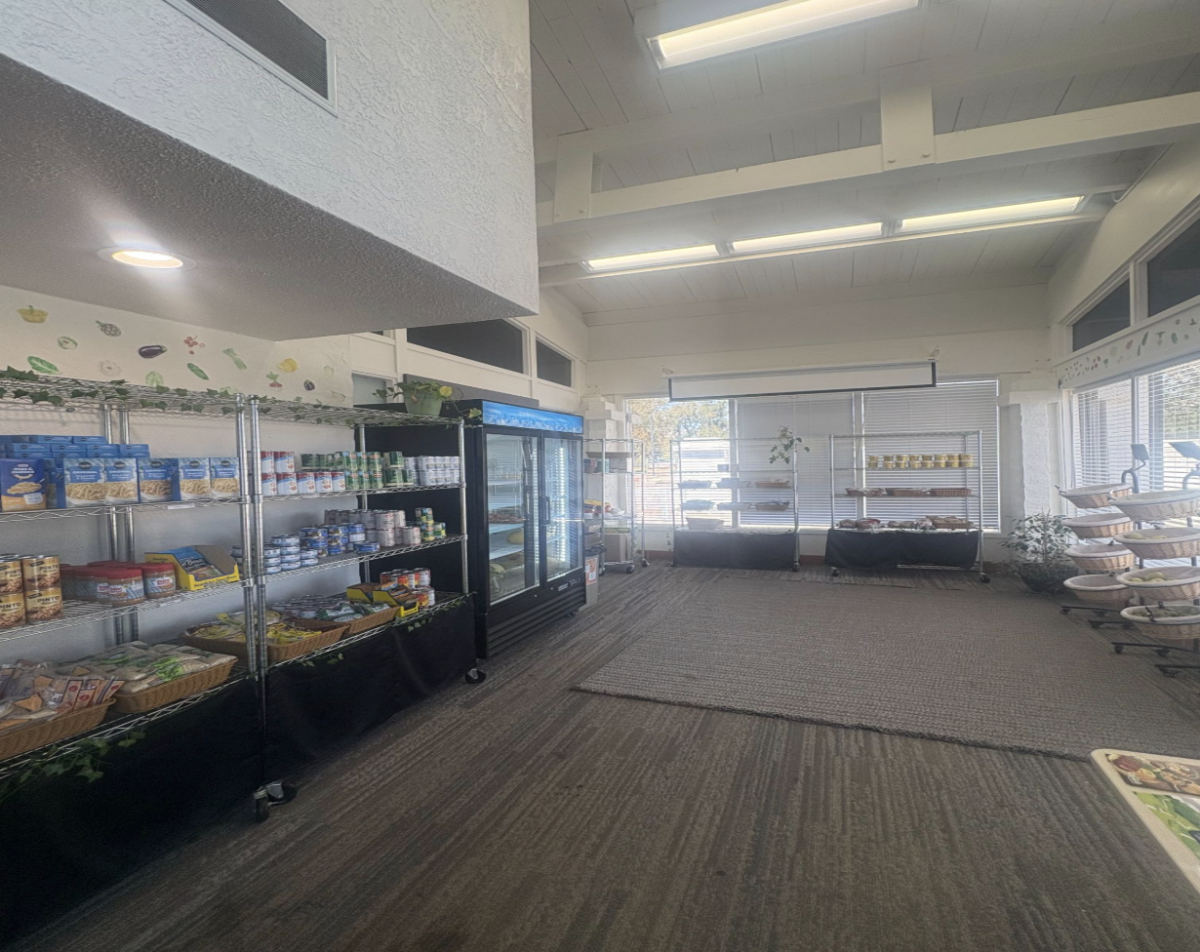
When Ryder Gangemi walks into the Cougar Pantry, she is not just looking for a quick snack between classes. Sometimes she is looking for the start of dinner.
If she finds tortillas, she can buy meat later and make tacos. If there are fruits, vegetables, milk or bread, those items can help shape what she eats that week. For Gangemi, a full-time student-athlete at Cuesta College, the pantry is not just an emergency resource. It is part of how she manages the rising cost of food while balancing school, athletics and daily life.
“I am a full-time student athlete and food is really expensive, and so if I can get it for a cheaper price or no price, I’m going to use all the resources that I can,” Gangemi said.
Across Cuesta College and San Luis Obispo County, food assistance programs are seeing a need that goes beyond students stopping by for a snack. Students and community members are using food assistance to help fill real gaps in grocery budgets as the cost of living continues to rise. At Cuesta’s Cougar Pantry, workers have noticed more students coming in this semester, and at the county level, the SLO Food Bank has also seen increased participation across its programs.
Sarah Anderson, who works at the Cougar Pantry as a front desk helper and shelf stocker, said the pantry has become an important source of groceries for many students.
“I would say it’s very important,” Anderson said. “There’s a lot of people who are dependent on it, and this is how they get their groceries.”
Anderson works at the pantry Monday through Thursday from 9 a.m. to 2 p.m. Her shifts often include restocking shelves, organizing new items and helping students find what they need. She said more students have been coming in this semester, partly because the pantry now has more food and has gone through several changes.
“There’s a lot more students this semester, just because we have a lot more stuff, and we’ve made a lot of changes,” Anderson said.
The items students take most often are not always luxury items or extras. Anderson said bread, eggs, milk, snacks, cereal, fruit snacks, Slim Jims and cup o’noodles are popular. Essentials like milk and bread sell quickly when they are available because they are not always in stock every week.
Those details show how student food insecurity can look on a normal school day. It can look like a student-athlete using the pantry once a week because it is close to practice. It can look like a student waiting for bread, eggs or milk to come in. It can look like someone building dinner around whatever food is available that day.
For Gangemi, the pantry’s location matters because she is already often on campus for practice. She said she usually comes in about once a week and looks for fresh fruits, vegetables, refrigerated items, milk and bread. The pantry helps her plan meals and makes food more affordable.
Gangemi said there should not be shame in using food assistance.
“It’s not embarrassing to need help with food, because everyone needs to eat, and food is really expensive,” Gangemi said.
That idea connects to the way food assistance programs are trying to operate beyond campus. Abbi Johnson, senior manager for community services at SLO Food Bank, said the organization serves communities across San Luis Obispo County, from San Simeon and California Valley down to Nipomo. The food bank works with more than 70 agency partners and runs 39 neighborhood food distributions each month.
Johnson said demand has increased across programs over the last year, and she linked that increase to the rising cost of living.
“With the cost of living increasing, we obviously see that it has resulted in people utilizing our services, which we’re more than happy to see that people are able to access food if they need it, but we’ve absolutely seen an increase over the last year in participation across programs,” Johnson said.
The SLO Food Bank also operates pantry services on site Monday, Wednesday and Friday from noon to 5 p.m. Johnson said fresh produce is one of the major foods the food bank distributes and one of the most requested items. The organization also runs senior farmers’ markets and children’s farmers’ markets to bring fresh produce to eligible schools and senior facilities.
A major part of Johnson’s work is making sure food assistance is easy to access. For neighborhood food distributions, people are only asked for their name, ZIP code and number of people in their family. No ID is required.
“We try to make our services extremely low-barrier, so people shouldn’t struggle to come and receive food from us,” Johnson said. “We make it a really easy and comfortable process.”
That low-barrier approach matters because food insecurity is not always visible. A student may be going to class, working, practicing for a sport or supporting a family while still struggling to afford groceries. Anderson said that some students who use the Cougar Pantry also have families, which changes how the pantry should be understood. It is not only a place for quick campus snacks. For some people, it is part of how they feed themselves and others.
The challenge is that the need can exceed what is available at any one time. Anderson said essential items like milk and bread go quickly when they show up. That means access is not only about whether a pantry exists, but also about what is stocked, when students can get there and whether the items match what people actually need for meals.
Still, the Cougar Pantry and SLO Food Bank are helping reduce pressure for people who are trying to stretch their money. Johnson said food assistance can help people manage other expenses, such as medical bills and utility bills. For students, that pressure can include tuition, transportation, rent, athletic schedules and the everyday cost of eating.
For Gangemi, using the pantry is practical. If a resource is available and food is expensive, she said she would use it. Her experience shows how food assistance can become part of a weekly routine instead of a last resort.