
In a quiet room on the bottom floor of a hotel conference center, a small group of student journalists from across the country gathered to learn about disability reporting at the 2026 Associated Collegiate Press Spring National College Media Conference on March 6.
The breakout discussion was moderated by Julia Métraux, Mother Jones’ first disability reporter, who covers issues, policies and stories that are specifically related to the disability community and public health.
Disability reporting as a formal field in journalism began in 1998, with the founding of the Disability Media Project by Suzanne Levine, a freelance photographer based in San Francisco who specialized in disability issues in her work, and who felt that people with disabilities were often inaccurately portrayed in the media.
The project later became the National Center on Disability and Journalism in 2002, as Levine moved across the country, eventually settling at Arizona State University in 2008.
Though the field continues to grow, with the number of journalists with disabilities entering the field rising, advocates like Levine are still working to change the narrative so often chosen for people with disabilities in the media. They are pushing for disabilities to be spoken about matter-of-factly, instead of only in an inspirational or tokenized context, which can reiterate misconceptions and stigma.
At the conference, Métraux was discussing some of the topics she’s been covering in her work, including a recent piece on the mistreatment and misdiagnosis of pregnant women with disabilities within the U.S. medical system, when a hand rose in the room.

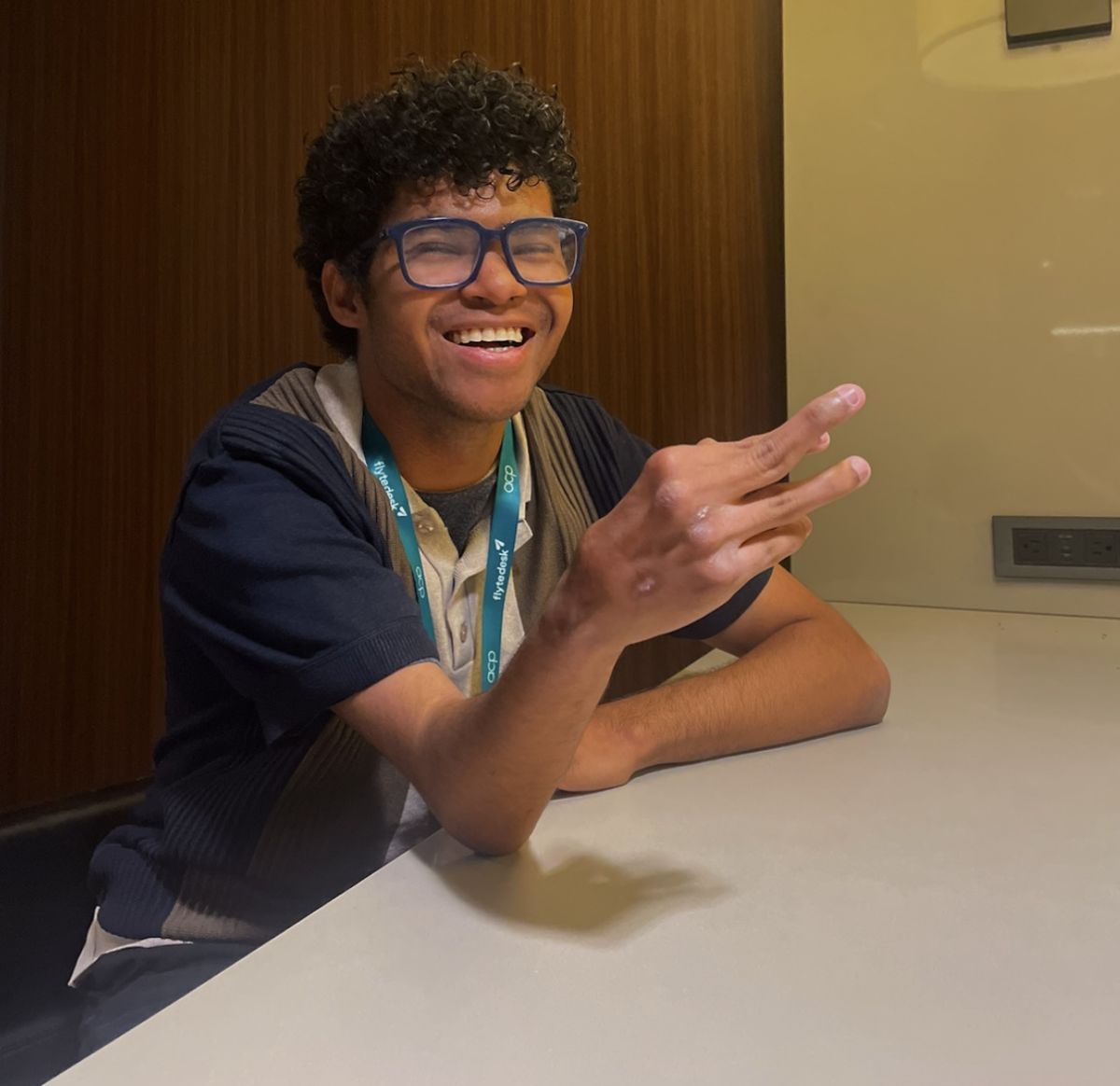
“What about disabled joy?” asked Jason Green.
The room shifted.
Green, a fourth-year student at Long Beach State University, where he works as an Arts and Life Editor on the Long Beach Current student newspaper, was referencing the movement #DisabledJoy in his question, which is an Instagram movement that began in 2018 by disability advocate Andrew Farkash, to challenge the misconception that disabled people can’t live happy and fulfilling lives.
“The conversation is growing for reporting on people with disabilities, because we have an administration in this country who is blatant in the harm they are committing to the community through legislation, and misinformation,” Green said. “However, the disabled community is so much more than the harm inflicted upon us.”
President Donald Trump signed the “One Big Beautiful Bill Act”, also known as H.R.1, in July 2025, which includes nearly $1 trillion in cuts to Medicaid, which funds a plethora of services to disabled people, including medical care, occupational and physical therapy, wheelchairs and more.
Trump has also pushed for massive layoffs in the Office of Civil Rights, which is one of the biggest agencies that enforces laws that protect the disabled community.
Although Green’s passion for disability reporting is palpable, he admits it can be challenging to be so dedicated to reporting on a community he is part of, and has to work extra hard to maintain objectivity, especially in moments of high emotion.
Green was born with two disabilities, Spastic Hemiplegia Cerebral Palsy and agenesis of the corpus collusum (ACC).
Cerebral palsy is a physical disability that affects the right side of his body, making things like typing incredibly difficult with the use of only one finger on his left hand. ACC is an intellectual disability that affects communication between the right and left hemispheres of the brain, impacting processing-related mechanisms such as reading and writing.
Green joked that his ACC is what makes him feel really special, as only 0.02% of the global population shares the condition.
The laughter continued as Green spoke about his writing roots. Even as a young child learning to navigate the world, he recalls knowing he would end up in something having to do with storytelling. Before he could read or write, Green would share the stories that came to his young imagination with his mother, who would write them down for him, and read them back.
Then, in seventh grade, Green began watching the news, noting his obsession with Good Morning America. Watching the news made him feel like an intrinsic part of the world, and it was a much more accessible way for his brain to digest information.
Now a journalist himself, Green says he feels his presence counters the field’s core principles.
“Journalism is so fast-paced and intense, which is the opposite of my existence as a disabled person,” Green said. “And I just love that. I love that my presence can maybe help people slow down, approach things differently, and learn about a community they may not normally interact with.”
Although Green’s disabilities may affect things like writing and reporting in louder environments, he says they also give him an incredible edge.
“My empathy is what sets me apart. Because of my own experiences, I am able to connect with people in a completely different way, especially if it’s another disabled person. I am able to ask the questions other reporters may be afraid to because of that inherent shared experience,” Green said. “When I report about disability, I find myself in it too.”
There isn’t a one-size-fits-all approach to interacting with people with disabilities. Some people may be okay with more direct questions, while some could find it upsetting. For reporters who are interviewing someone who is a part of the disability community, approaching the topic of identity and labels is extremely important, as there is a lot of nuance in the way people identify.
Some disabled people see their disabilities as just a medical condition, choosing to use the name of the specific diagnosis, rather than ‘disabled’. While others experience disability as an important part of their identity, and feel how it shapes their beliefs, relationships, place in their communities, and even their politics.
“The wording really matters,” Green said.
“In journalism, I want to be seen as a journalist with a disability, not a disabled journalist; however, outside of journalism, I consider myself a disabled person,” Green said. “The distinction is really important to me.”
As a Black and Vietnamese person, working to understand himself and the different cultures he is a part of, has always been a part of Green’s life.
“My entire identity is centered around intersectionality. No matter what, even if I focus on disability, I still have my other identities,” Green said.
Green acknowledged the stigma towards people with disabilities present in both Black and Vietnamese cultures, saying that he is often looked at as not being capable of conversation or simple tasks. “Even in my own culture, I feel discriminated against,” he said.
People with disabilities are considered the largest marginalized group, with an estimated 1.3 billion people experiencing a significant disability today. A lot of the stigma is due to miseducation, structural racism and inequity in healthcare, which prevents people from having proper diagnosis.
The harm is not just caused by people who only see a disabled person for their disability, but also when someone chooses not to acknowledge the disability at all.
Green feels lucky that the newsroom he is a part of at the Long Beach Current has not shied away from acknowledging and working to understand and support his disabilities.
“My newsroom is my family. They recognize my disability, but look at me first as a journalist,” Green said. “I need people to acknowledge my disability, because if you deny it, you are denying my existence. My disability is not separate from me.”