
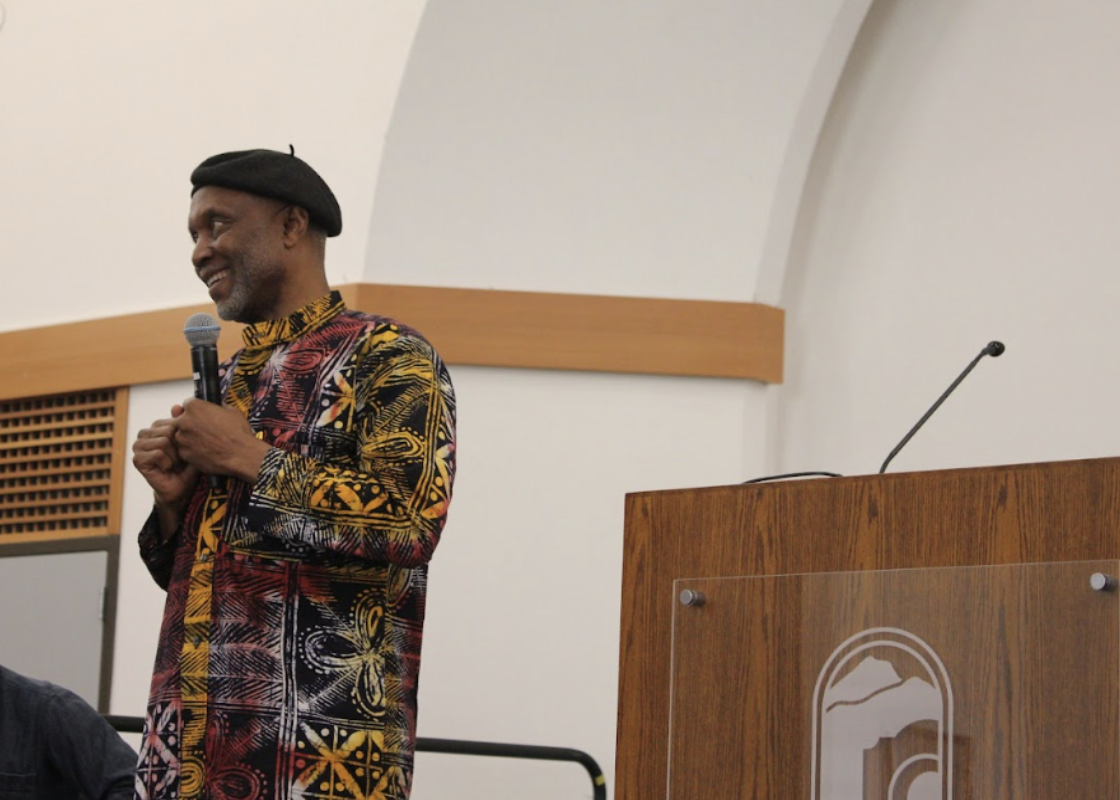
At Cuesta College, conversations about student success often center on data, retention rates and closing achievement gaps. But during a recent campus event, Nigerian-American author and professor, Okey Ndibe reframed that conversation with a more personal and urgent question: Why is it that in many places, students of color do not do well?
On April 24, an event hosted by Cuesta professor Billy Keniston drew students and faculty into a discussion grounded in Ndibe’s essay, “Eyes to the Ground: The Perils of the Black Student,” which examines how bias in the classroom shapes student outcomes.
For Ndibe, shaping students’ learning begins with a willingness not to know. He described a familiar classroom moment where a student hears a term they don’t understand but chooses silence over exposure.
That silence, he argued, is where learning stops. “If I raise my hand and say, ‘What does this mean?’ I’ve taken a risk,” he said. “Learning is constantly asking questions…opening yourself up.”
In Ndibe’s view, the role of an educator is to create a space where that risk feels possible, where students are not judged for what they don’t yet know.
Rather than focusing solely on institutional policy, Ndibe emphasized something more immediate. That the everyday interactions between students and educators is most important, “the activity of learning is an exercise of vulnerability,” Ndibe said. “To learn…is to recognize that you must take risks.”
Going beyond policy is seeing what accountability looks like. When asked how institutions like Cuesta can move beyond performative commitments to equity, Ndibe pointed to classroom culture rather than just administrative decisions. He encourages practices that give students ownership of their voices, such as storytelling, to build confidence and community.
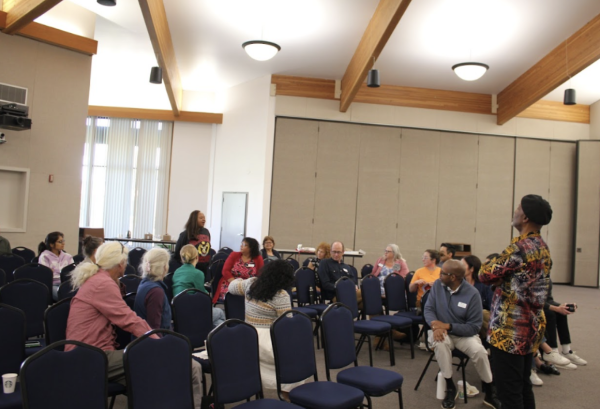
“Everybody should tell a story,” Ndibe said. “You have too many stories, you just don’t know which one to pick.”
By validating student experiences, he argues, classrooms become spaces where students see themselves as contributors, not outsiders. “To be a full citizen is to have that capacity to speak,” he said. “To speak is also an obligation to listen.”
For Keniston, bringing Ndibe to campus was about more than hosting a speaker and a friend; it was about challenging a growing concern in higher education. After two years at Cuesta and a long history of working with Ndibe, dating back to their teaching together in upstate New York, Keniston says he has noticed a consistent institutional focus on improving student success metrics.
But he worries that effort can sometimes take the wrong direction. “My fear is that…we’re going to just lower the bar,” Keniston said. “We’re not going to encourage our students to actually thrive. We’re just going to treat them as if they’re not really ready.”
Ndibe’s work, he said, helps articulate what that experience feels like from a student perspective. “It does such a good job of explaining…what it feels like as a student to have a professor tell you, ‘you don’t really have it,’” Keniston said.
For students like Reva Strawn, the event offered a space for reflection on experiences that often go unspoken. “There are so many aspects of racism that we don’t understand that are embedded into a system,” Strawn said. “As a person of color, I experience it and people don’t always see it.”
She described the event as a way to make those experiences more visible, and more understandable to others. For students who may not share those experiences, her advice was simple: “Just having an open mind, honestly.
For an event highlighting student success, Ndibe also addressed a current campus issue when asked about possible cuts to embedded tutoring programs. His response was direct. “Far from retreating…[this is] one of the places where you get the most help,” he said. “It would be a tragedy if this college were to retreat from this connection.”
He emphasized that tutors play a critical role in bridging the gap between students and professors, especially for those who may struggle in silence. “There is no tool that is more powerful than knowledge,” Ndibe said. “And every meaningful knowledge begins with self-knowledge.”
At the core of Ndibe’s message is a challenge to rethink what equity in education actually means.
Rather than lowering expectations, he argues for raising them, while giving students the support and respect needed to meet them. “The cause of social justice must begin with us holding every student to the same standards,” he said. “In fact, expecting more.”
Ultimately, his message returns to a simple but often overlooked idea: seeing students fully. “Let’s make that change by actually seeing our students,” Ndibe said.