
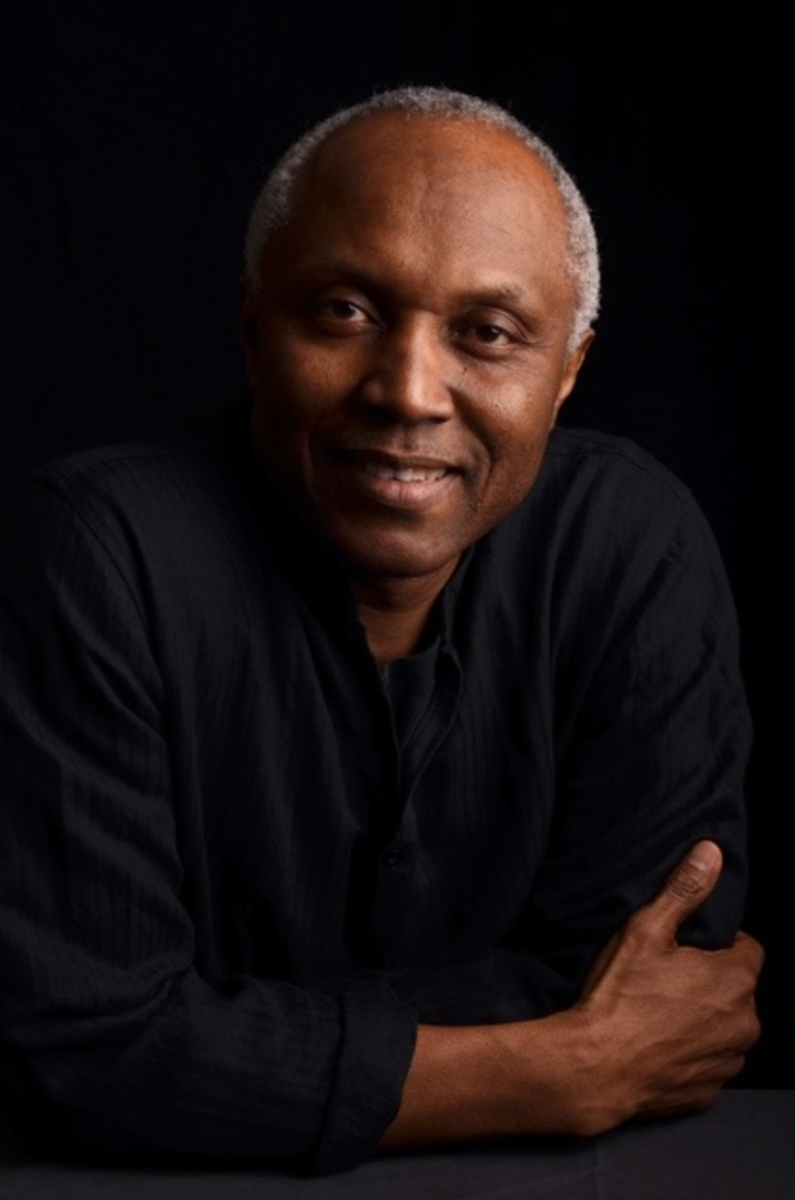
Okey Ndibe, a Nigerian-born and Connecticut-based author, novelist, speaker and professor, will be speaking at Cuesta College on Friday from 10 a.m to noon in room 5400 on the San Luis Obispo Cuesta campus. The event is free and open to the public.
Ndibe has an extensive list of published works, including his memoir, “Never Look an American in the Eye,” several novels, including “Foreign Gods Inc.” “Colonial Ghosts,” and “Arrows of Rain,” as well as opinion pieces that have been published by numerous publications, including The New York Times, BBC online and Al Jazeera online.
The conversation at Cuesta will be centered around an article Ndibe wrote in 2000, “Eyes to the Ground: The Perils of the Black Student,” which was recognized as the best opinion piece in an American newspaper in 2000 by the Association of Opinion Page Editors. The article was written about the problematic dynamic of students of color being consistently underestimated in the classroom.
In the article, Ndibe references his own experiences of being underestimated in academia, including a story about when he was a graduate student at the University of Massachusetts at Amherst and asked his professor how long the research paper he was working on should be, and the professor responded, “it is supposed to be 18 pages, but just do what you can.’ Now 26 years since its publication, Ndibe will be offering an updated view on his experience, not just as a student, but as a parent to three Black children in America, and a college professor.
Cuesta History Professor Billy Keniston, who is facilitating the event, said it feels like a really important time to be having this discussion, specifically at a community college. “There is this constant mantra at community colleges about student success rates and data. We are always wanting to improve and help students, but there is a real danger in increasing success by lowering our expectations,” Keniston said. “We are trying to challenge that idea and focus on expecting more of students instead of lowering the bar.”
This expectation of students does not always mean massive increases in workloads, or difficulty of courses, but rather a change in what the class’s foundation is built upon. For both Ndibe and Keniston, this means creating classrooms that are centered around storytelling, conversation, and the encouragement of curiosity.
Ndibe expressed gratitude for the way stories and literature have opened his life and allowed him to travel the world, something he didn’t always think was possible as a child living in poverty in Nigeria, “when I was growing up, it was a treat to have a meal and walk away feeling full. My parents did not have enough to feed five children,” Ndibe said. “My mom would ask us, ‘did you have enough?’ We would say no, and she would tell us to go drink more water.”
Ndibe said as a younger person, he mistook his parents’ poverty as a sign that they did not have rich and beautiful lives, and didn’t take the time to ask them for stories. It wasn’t until he was older and deeper in his education that he realized that this was untrue, and began to sit with them and listen, and was blown away by the depths of their experiences. Ndibe now encourages his students to do the same practice with their parents in hopes of showing them the power found in oral tradition.
“Even hearing stories from strangers has the power to change the way you think,” Ndibe said. “That person talking too loudly on the bus, plane, or street, listen, and find the gift in it.”
The discussion on Friday will feature storytelling, with a discussion of Nidbe’s article and time allocated to answering questions on the cuff from both Keniston and the audience.