
College students continue to be one of the highest-risk groups to develop mental health problems in the U.S. due to the unique mix of stresses they face, often including intense academic pressure, social stress and developmental transitions.
Cuesta College students are no different. Over 50% of California Community College students work while attending classes, showing that the stresses go beyond campus.
According to findings from a 2024-2025 study of student mental health by the Healthy Minds Network, 70% of college students reported experiencing moderate to severe anxiety or depression symptoms.
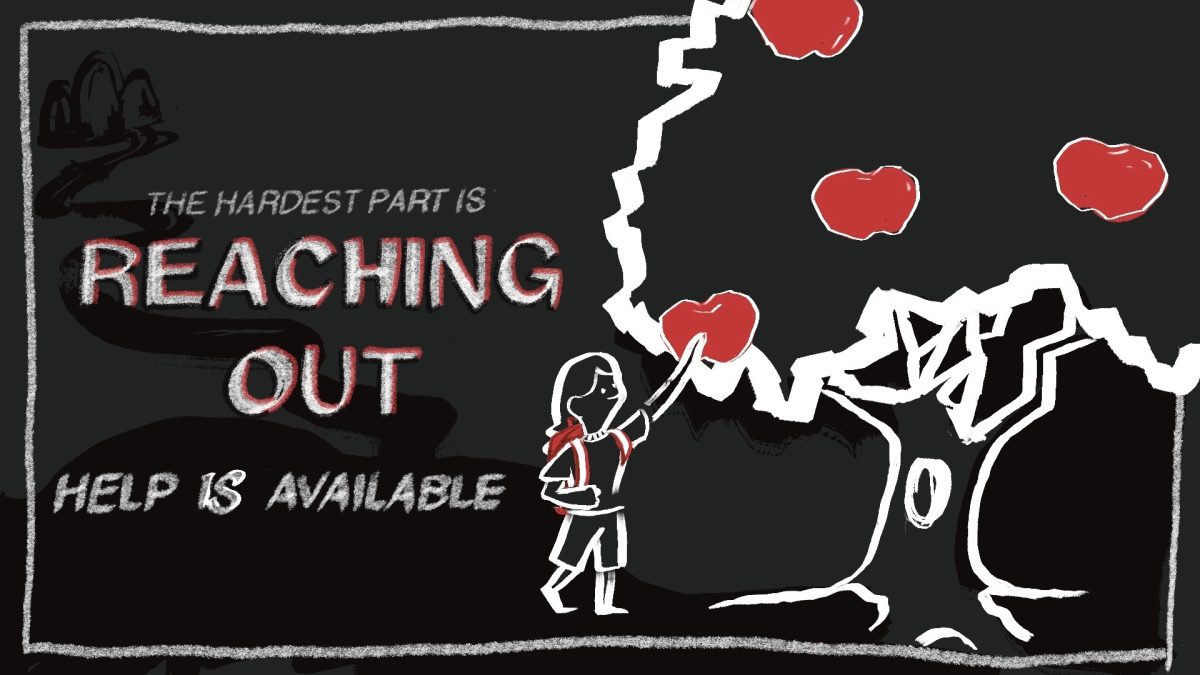
One of the biggest concerns for students struggling is accessibility to mental health resources.
According to the same Healthy Minds Network study, 20% of students said mental health resources were too expensive, 24% said they did not have enough time to use them, and 14% of students were unsure of where to get help in the first place.
The barriers to finding support for college students are not new, and places like Cuesta College’s Student Health Services work hard to help soften them.
Cuesta’s Student Health Services offer a wide range of medical and mental health therapy-related services free of charge to all Cuesta students, thanks to the $19 health fee that every student pays as part of their registration for each semester.
Every student receives credits for eight sessions of free therapy per semester that can be used in two ways: either with one of Cuesta’s three diversely trained therapists, offering in-person sessions on the SLO campus Monday-Thursday 9 a.m. to 3 p.m. or, for students who need more flexibility in their appointment times, or have bilingual needs, they can use their eight sessions via Betterymynd, a teletherapy service which connects Cuesta students with trained therapists via Zoom.
For students who feel intimidated by traditional mental health therapy, there is another option. Think Hopeful is a 24/7 wellness program that offers students one-on-one coaching, wellness groups and an anonymous, monitored platform to connect with other college students in California also working toward their wellness goals.
Students have access to Cuesta’s online health portal to make appointments, but can also call or walk in and talk to someone in the Student Health Services office to help the process feel more easeful.
“Finding the right fit with a therapist or coach is so important to the level of depth you can go within those sessions,” said Nicole Johnson, director of Student Health Services at Cuesta.
“In order to do good, deep work, you need a connection. This is why we sometimes like to describe to students that finding a therapist can be like dating, and you don’t end up in a relationship with everyone you go on a first date with,” Johnson said. “It’s okay to try out different therapists to find the right fit. We actually really encourage that.”
Although Cuesta Student Health Services is designed to be a short-term mental health model with eight sessions of therapy per semester, this does not mean that students who feel their needs are greater should stay away.
Student Health reserves same-day walk-in appointments every day for any student who meets their crisis criteria and needs immediate help. “If a student meets what we consider a crisis, suicidal and or homicidal ideation, recent experience of domestic violence or intimate partner violence, or unwanted sexual encounter, we make sure that they meet with someone that same day,” Johnson said.
For anyone in crisis, it is recommended to call or walk in, as the online portal will not show you the same-day services available.
Student Health Services can also assist in more chronic struggles with mental illness.
“We often act as a bridge,” Johnson said. “If someone is struggling with more persistent mental illness and needs integration with other services like psychiatry and medicine, we will work to help refer these students to other services in our community that offer long-term, more specialized services, while still helping them in the interim.”
One of the local places offering these more long-term services is Transitions Mental Health Association (TMHA), a non-profit organization working to support SLO County residents by eliminating mental health stigma and promoting recovery and wellness support services.
“The number one resource we recommend across all ages, but especially for college students, is the Central Coast Hotline,” said Kendra Belch, TMHA’s education outreach coordinator.
The Central Coast Hotline is a 24/7, completely anonymous, confidential and free-of-charge hotline that is specific to the Central Coast, meaning that if someone calls or texts in, they will be speaking with someone in SLO County who is already familiar with local resources.
“If students have been struggling to navigate the mental health system, or even just the health care system in general, they can call or text in and let us know what they’re looking for, and we will do all of that groundwork for them so they don’t have to feel frustrated and confused navigating all of that,” Belch said.
The hotline is also there 24/7 if somebody is actively considering suicide or in a mental health crisis. They can call or text in, and TMHA will help them make a safety plan, bring them down from the point of crisis and get resources sent out to them if necessary.
However, the hotline isn’t just there for moments of crisis. “If students have had a bad day, or are feeling lonely, and just want to talk, they can call or text anytime” Belch said.
The hotline offers up to 80 languages over the phone via their translation services, while texting is currently only in English.
Another program at TMHA is the Brief Therapy Clinic, which offers SLO County residents up to 25 free therapy sessions.
“We want to keep reducing the barriers, that’s our mission, to give everyone a place to be seen, a place to receive help,” said Roberto Cueva, Central Coast Hotline program manager at TMHA.
Another SLO county non-profit that works with Cuesta’s Student Health Services is Lumina Alliance, which provides support to victims of sexual or intimate partner violence.
Lumina also has a 24-hour hotline that connects you with a SLO County Lumina staff member who can help provide information, resources or get you to a safe house.
“Close to half of all women living in the U.S. have experienced some kind of sexual violence, and estimates for indigenous and trans folks are even higher. But help is out there to support you,” said April Cole, communications director at Lumina Alliance. “You are not alone.”
Johnson said she tells students that even one sentence of acknowledgement to a friend who is struggling can make a difference.
“Sometimes, we wait for the person struggling to ask for help, but they often don’t, or don’t even know how they’re feeling or where to begin,” Johnson said. “Saying something like, ‘I just want to acknowledge that this may be a hard time for you, and that I am here for you if you ever want to talk, or need anything,’ letting them know you see them can be the thing that opens the door.”
Johnson has noticed an increase in the number of students at Cuesta seeking help for their friends, some even walking them over to the Student Health Services office to be a shoulder of support.
“We have to respect where people are at in their processes while still trying to be there for them,” Johnson said.
“Therapy works best when a person is open and ready for it. That doesn’t mean it isn’t intimidating or scary, but I recommend that if someone’s curiosity is piqued, to try it, or come talk to us and see if it’s less intimidating than they may have conjured up in their head,” Johnson said.
Cuesta’s Student Health Services are open Monday through Thursday 8:30 a.m. to 4:30 p.m. in room 3150, and can be reached via the student health portal or by phone at (805) 546-3171.