


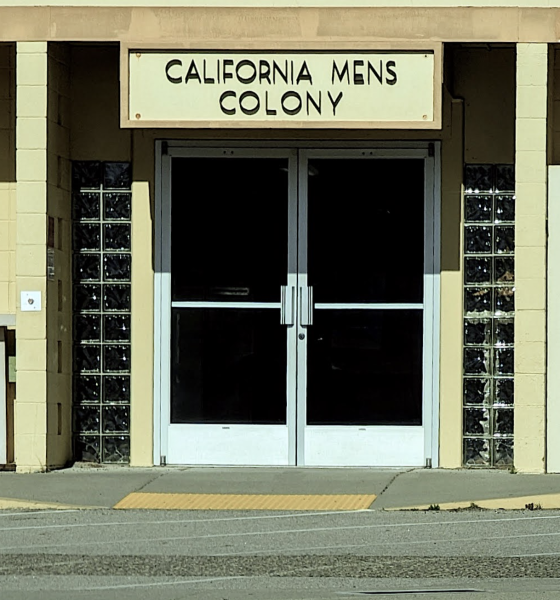
Fear is the driving force behind most, if not all, crime. Before becoming incarcerated, people are imprisoned by this fear into a way of thinking that eventually leads them to institutions or death. Hope is looked upon cynically by most who enter the doors of California Men’s Colony as foolish and futile. They are caught in the revolving doors of recidivism and resignation. Some will never see the other side of that door again. Lifers, homicides and suicides become the casualties of the war on crime, the war on drugs, the war on poverty, and their own internal wars of guilt and shame. Whatever act of lawlessness brought them behind the walls of prisons and jails is not to be excused or minimized. Their debt to society must be repaid, but for the penitent to truly atone, the hope of true freedom must play a part in the equation. Without that hope and a vehicle to transport them from fear and ignorance into a new way of thinking and believing in their chances to live a happier, more productive life, there is only punishment behind those doors.
The author Stephen King said it best in the line from the movie, “Shawshank Redemption”: “Fear can hold you prisoner. Hope can set you free.”
I quote him not only as someone who admires his great works of literature, but as someone who owed and paid a debt to society because I committed the act of armed robbery 48 years ago and came to terms with my demons and better angels over three years. Hope was my way out of my mental and physical captivity.
I learned a lot in prison. First and foremost, I learned I did not want to return. I learned how to play chess, which trained my mind to perceive the consequences of my actions. I learned how to bake meals for 100 hungry men, who let you know right away if you did a poor job of providing them with one of the only sources of happiness there. I learned that I was not cut out to be a carpenter, but that, like Jesus, I could be a leader of men in my own way and by example when I nonviolently ended a prison riot.
I learned to stop hating my circumstances and my parents and everybody else for what they either did or did not do for me. But most of all, I learned to hope that someday I could be free. I remember working in the kitchen one day, looking out at the Blue Ridge Mountain range of Virginia, majestic snow-capped peaks surrounded by pastel-blue skies, the peaks piercing the clouds heavy with life-giving water. All that beauty was marred by the thick grey iron bars. I made a vow to myself then and there to look at every day as one day closer to home. I decided I would do nothing to cause me to stay even one day longer than necessary in the custody of the Commonwealth of Virginia.
Luckily, I did not. Even though there wasn’t a college element in my skills training, I have to say learning new skills gave me something to look forward to, something to spark my imagination of what my future could be. I hadn’t darkened the door of a prison since my release 45 years ago until December 2025, when I was a guest of the Cuesta College Rising Scholars Program at CMC, where I witnessed the pride of the six men incarcerated there who had completed the 10-week intensive culinary training program.
Their certificates were hard won from a tough task master – Rosanne Feild, a former correctional officer who taught the men so well that one of them stated that when he worked at fire camps providing hot meals for firefighters battling blazing fires all day. He was overqualified by the training she had drilled into him; that he had developed an inner strength from her excellence of instruction. Unfortunately, that was Feilds’s last graduating class as she entered retirement. Also present was Danny Samuel, the warden of CMC, who was also entering retirement. Samuel said he regarded the culinary program as one of his best accomplishments at CMC; he was also instrumental in getting a $36,000 infusion of cash to keep the program alive due to its value to the state. He also secured the funding for a mobile food unit that’s used for training at CMC and at fire camps. So far, over three years, there have been 22 cohorts of 10-week classes that have graduated there. Each class provides food handler certification to all the graduates that can be used once they reenter their communities to make a fresh start – as I did 45 years ago. Since then, I’ve been a contributing member of my community wherever I am. I am a father who was in the home to raise my son. I’ve owned several homes and been appointed by a governor to be a commissioner alongside the attorney general on the State of Oregon’s Alcohol and Drug Policy Commission. I’ve stood up for my rights and the rights of others. Although I am not proud of my time in prison, it taught me the true value of freedom and the value of hope. I hope the Rising Scholars program can continue to provide the knowledge and hope to help more men find true freedom.
