

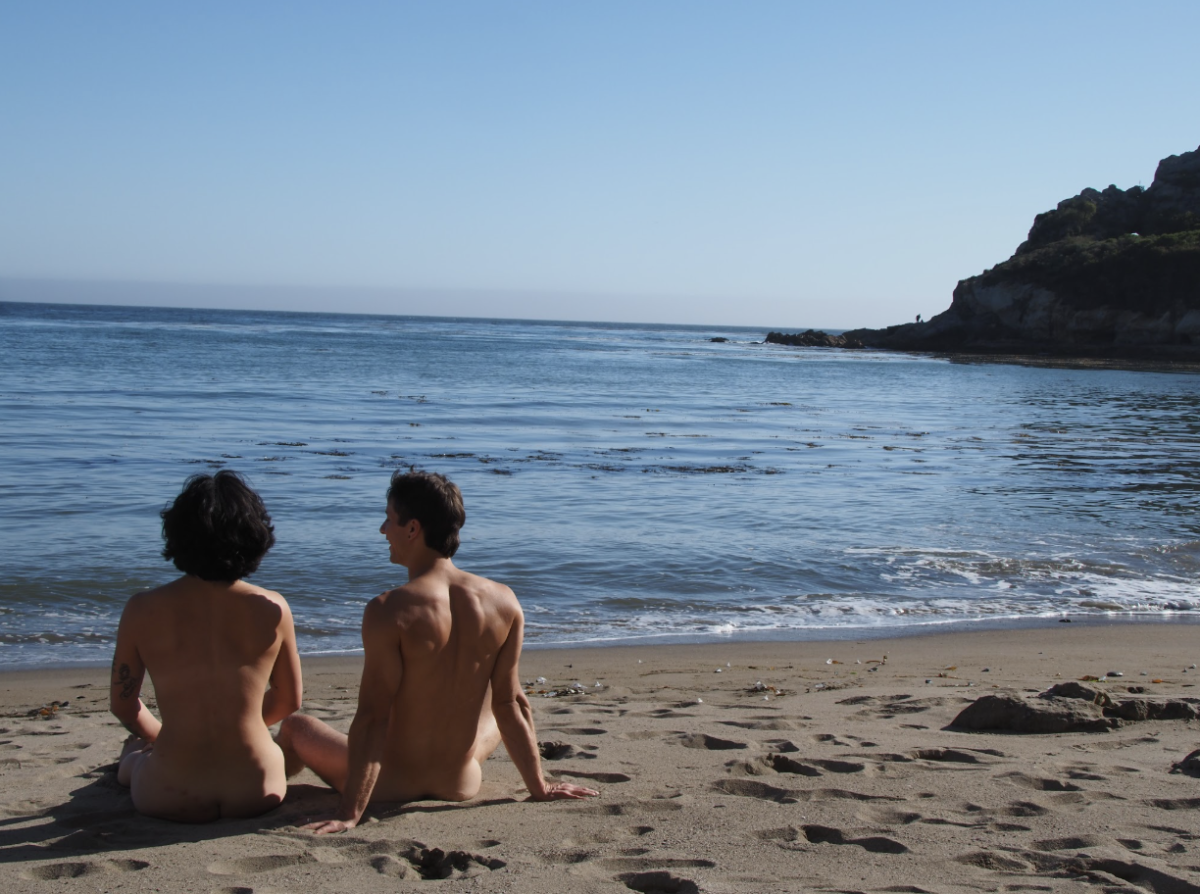
For some people, nothing sounds scarier than being suddenly naked in front of a crowd of people, yet conversely, a piece of folk wisdom is that if you are nervous meeting new people, you should imagine the other person to be naked. Between these ideas, we find the nude beach, where everyone is naked, and nobody cares.
Nude beaches are generally prohibited by law in California, yet local “clothing-optional” beaches exist due to low enforcement, and cultural tolerance towards nudity on beaches has allowed for generations of people to enjoy some select beaches as de facto nude beaches, most prominently Black’s Beach in La Jolla and Pirate’s Cove, Avila.
Relics of the puritanical movements in America’s history still echo today, as reservations about mixed-gender nudity are quite common across America. Additional apprehension has been noted among younger generations, mostly Gen Z, despite them enjoying the most liberal clothing culture in American history.
These apprehensions can be traced back to Gen Z’s relationship with social media content, which often showcases the most physically fit and visually appealing people, while ordinary people and figures are rarely seen. This distorts the perception of human bodies, can lower self-esteem, and adds even more pressure on students and young adults who are already struggling with self-identity and self-esteem.
This is where the nude beach comes in.
Nude beaches are a staple in Europe, especially in Germany, which hosts over a 100 nude beaches and hundreds more unofficial that still enjoy the cultural acceptance of nudity. Many of these are not even in distant, out-of-the-way locations, as one would imagine, but often smack-dab in the middle of big cities like Munich.
While nobody is expecting this to be the case for cities in America anytime soon, the benefits of experiencing a non-sexual nude communal activity, such as sunbathing or playing frisbee, can greatly boost self-esteem and body positivity. Research shows that even if a person doesn’t fully strip themselves, being around and interacting with other nude people can already help lower body-image insecurities.
“I struggled a lot with my weight in high school, and getting slammed with all the ads and GLP-1 injection ads certainly didn’t help at all,” said Oliva Churches, a San Luis Obispo resident. “Yet when I get here, no one cares, everyone is doing their own thing, and I am here with my friends, and they just care about who I am.”
Even the act of being nude physically can also lay a great foundation for deep conversations, as nude beach goer Brian Schmuecker explained. “I have had the best, most honest conversations on this beach,” he said. “Just already having nothing to hide, I want that to carry over in my words as well.” Schmuecker goes on to say that he firmly believes that seeing people for who they are really helps with nervousness in approaching difficult topics: “If everyone is vulnerable, then expressing that nakedly really helps foster trust. I was able to say and confess things about how I feel and who I am, but Pirate’s lets me do this way more easily.”
Doesn’t that sound like something we all could use?
Too often, I see friends get confused about what emotions a text was supposed to convey, overthink a response, and perhaps forward it to others for advice. We could all use a genuine conversation, an honest statement, and some meaningful trust-building exercises. I do not expect everyone to run to Pirate’s Cove to resolve their issues, but perhaps we can draw from the wisdom of our fellow naturists and nudists and strip down our relationships with each other and ourselves, and learn how simple and easy being yourself can truly be.

Emily J • May 12, 2026 at 4:58 pm
An insightful piece that was exactly what I hoped for! Speaking about Pirates Cove and “public nudity” through the lens of history, culture, and human connection, rather than a spectacle to be judged. As a local who grew up going to Pirates from the age of 15 and up, I genuinely enjoyed this.