

College campuses have long been of interest to me, having visited many schools in my lifetime, including Harvard Yard in the Boston area, both Clark Colleges in Atlanta and Vancouver, Washington, and Morehouse and Spellman Colleges in the Atlanta University Center. I have observed that the design of the buildings at these schools speaks a language of architecture that’s intended to draw attention to the identity and goals of the school’s educational and cultural philosophy. Most recently, I have been a student at both Allan Hancock and Cuesta Colleges.
I am currently attending Cuesta, where I am majoring in journalism. My early opinions of the Cuesta campus were that it was small and unremarkable. It seemed modest compared to other campuses I’d been on. It wasn’t until I spent time experiencing the campus that I began to understand the difference between the predominantly Ivy League personalities of other schools’ designs and the attractive yet humble character of the Mission influence this school’s campus embraces.
At 225 acres, it is hardly small, though the view from Highway One would suggest that. Having walked the entire campus, I witnessed firsthand that it is larger than it looks.
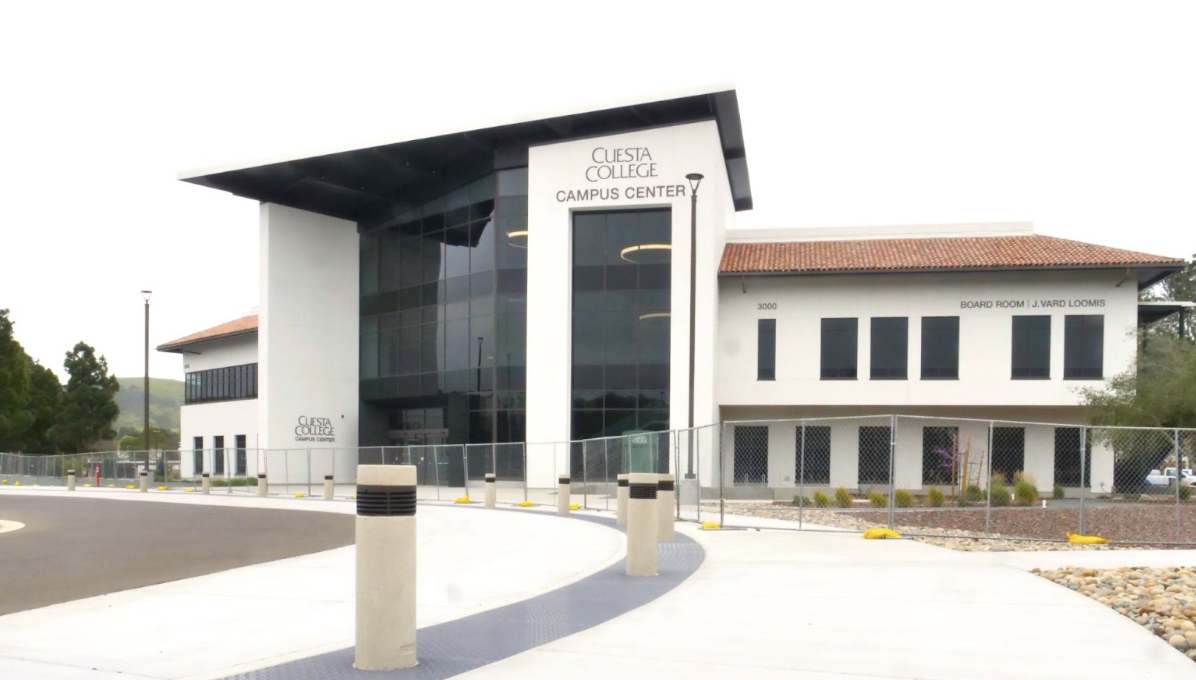
This design is intended to be integral to connecting students to one another and to be environmentally harmonious with the natural beauty of the surroundings. Even the grand scale of the new Student Center Building conveys a sense of service to the community, as does its front-facing transparent appearance. I never thought of structures as being nutritional before now, but I do feel nurtured by the environment, thoughtfully curated by former and current administrations of Cuesta, to create a place of learning and cultural immersion.
According to the Cuesta Facilities Master Plan, “the San Luis Obispo campus, inspired by the early missions of the area, has a consistent ‘modern mission’ style throughout. Buildings have the architectural qualities of thick, light-colored mass walls, arcades, and covered walkways, and traditional clay tile roofs.”